I had been visiting Shanghai every year since 2006. There was one exception: 2010, the year of the World Expo, the year my father died. Then there was a longer exception. The pandemic closed the country in early 2020 and kept it closed, for the practical purposes of a Thai national with a research visa, until well into 2023. By the time I was able to return, I had been away for nearly four years. It was the longest gap in my Shanghai life. I want to begin this book by telling you what the return felt like, because the return is the reason this book exists.[1]
I came back, in the autumn of 2023, the long way. I had spent the previous week at the Smart City Expo World Congress in Changsha—the first time China hosted a regional edition of the global smart-city conference, in a Hunan provincial capital that had, in the years I was away, become a city I would not have recognised. From Changsha I took a high-speed train to Shenzhen. I spent three days there visiting friends, walking through factories, learning what digital-economy work looked like at the manufacturing scale that, by 2023, was producing most of the consumer hardware sold anywhere on the planet. From Shenzhen I took an overnight high-speed train to Shanghai’s Hongqiao station. I want to flag that detail because in 2006, when I first came to Shanghai, the high-speed train did not exist. The first Chinese high-speed line opened in 2007. By 2023 the network was so dense that ordinary people across the country were using it the way ordinary people in 1995 New York used the subway: routinely, without thinking about it, as the medium of daily life rather than as a notable mode of travel.
I arrived at Hongqiao in the late afternoon, took the metro to the station nearest Tranquil Light, and walked the last six blocks to the gate. I was, embarrassingly, still in the suit and tie I had worn at the Changsha conference. I had not changed in three days. I had not slept enough. I was carrying a suitcase that was visibly too large for the lane. I walked through the steel gate of the compound, into the long thoroughfare alley, and stopped.
Several of my old neighbours were there. They were sitting where they had always sat, on the small wooden stools at the mouth of the eighth lane, with thermoses of green tea, in the late-afternoon light. One of them—a woman in her late seventies whose name I am no longer sure of, perhaps Fei or Fu, who had been one of my closest neighbours on the second floor of my old building—stood up when she saw me. She walked over. She squinted. She put one hand on my arm. “Is that the Thai boy who lived here?” she said. “The one who spent a year with us?” I said yes. She told the others. The others nodded. Someone produced another stool. I sat down with my suitcase next to me, in my conference suit, and I drank green tea with my old neighbours for an hour while the sun dropped behind the Pudong towers visible in the gap between the buildings to the east.[2]
Almost everything inside the gate looked the same. Almost everything outside the gate had changed. The worker housing on the block to the south of the compound, where I had eaten dumplings every other Wednesday in 2014, was now a row of designer boutiques. The single street with two craft-beer bars in 2014 was now half a dozen streets with thirty craft-beer bars, several of which were specifically marketing themselves to a clientele that had not existed when I left. The retail along Huai Hai Road, the so-called Fifth Avenue of Shanghai, was visibly emptier than I remembered, partly hollowed out by the e-commerce platforms that had absorbed most of the city’s mid-range consumer spending in the years I had been away. The sky was bluer. The taxis were electric. The bicycle-share network had been rebuilt twice, with two different companies, in two different colour schemes, in the years between my last visit and this one.
The neighbour with the thermos—the same composite figure I had imagined at the gate when I first sat down to write the Introduction of this book—was, on this trip, an actual woman holding an actual thermos, sitting on a stool that had been replaced once since I had last sat on it. The book was already partly written. The book did not, until that afternoon, fully know that the city it described had continued without it. I want this Prologue, before anything else, to acknowledge that fact.
I had been coming to Shanghai for seventeen years before that afternoon. The first visit, in the summer of 2006, was a one-week reconnaissance trip with a joint MIT–Tsinghua urban-design studio. I have written about that trip in the Introduction, so I will not repeat it here, except to say that I left Shanghai at the end of that week with a small obsession that had not been there at the start. By the autumn of 2007, when I was beginning my master’s thesis at MIT under the late Stanford Anderson, the obsession had a name. The thesis was titled “The Politics of Built Form.” It was an argument against a then-conventional reading of skyscrapers as the architectural product of capitalism—a reading I had picked up, like most students of my cohort, from Sharon Zukin’s work on New York.[3] Pudong, I argued, did not fit the reading. The Pudong I had seen in 2006, and that I returned to several times over the subsequent two years to study, had not been built under conditions of land scarcity. The blocks were enormous. The plots had been laid out for visual effect, not for economic optimisation. The architects who had been hired to design the headline buildings—Richard Rogers among them—had submitted European-style schemes, several of which were rejected in favour of designs that combined mega-block planning with circular and bulbous forms (the Convention Centre’s two glass globes are the cliché example) that the local planning authority preferred. What I argued, and what Stanford encouraged me to argue, was that the form of Pudong was not principally an effect of capital. It was an effect of mianzi—face—the same logic of public reputation that I would, ten years later, find structuring the inside of every lilong gate in central Shanghai.
I went back nearly every summer after that. Some trips were research; some were friends; some were because I missed the city. There is one important exception. In the autumn of 2010, when I should have flown to Shanghai for the year of the World Expo, my father died on the first day of my anthropology programme at Harvard, and I went home to Bangkok instead. Several years on either side of that one are blurred in my memory now. What I remember clearly is the summer of 2013, when I arrived for what I expected would be a year of doctoral fieldwork: a research grant from the China Scholarship Council, a small dissertation supplement from the Department of Anthropology at Harvard, a one-year lease on the pavilion room I describe in Chapter 3.
The fieldwork did not stay a year. Before I had even completed the PhD, NYU Shanghai offered me a postdoctoral teaching position on a course that Jeffrey Lehman, the founding Vice Chancellor, was teaching to the first cohort of NYU’s Chinese undergraduates. The teaching extended my stay. A second postdoctoral year extended it again, with a parallel visiting fellowship at Fudan and a visiting professorship at the Shanghai University of Finance and Economics, where I taught American exchange students from a small constellation of US universities—the same constellation that produced, in the spring of 2016, the colleague who would, over the following decade, become one of this book’s most patient readers. Across those years I moved twice: out of the lilong pavilion room into a Pudong suburb, and again, in the last year, to a Puxi suburb near Fudan. The shifts in housing were deliberate. The first year of fieldwork had been about how the residents of the lilong stayed; the later years became about what happened to people who left. I followed several of my Tranquil Light informants across the river to high-rise apartments where they had been relocated, and I stayed close enough to keep visiting them.
By the summer of 2016 I had been in Shanghai long enough. I had a draft dissertation, a defence date, and the strong sense—shared, I think, by anyone who has done long fieldwork in the same place—that enough was enough.
I did not publish the dissertation in 2016. I did not publish it in 2017, 2018, 2019, or 2020. I want to admit that honestly, because the path of the book matters to its argument.[4]
After defending in the summer of 2016, I left academia for a stretch and worked for design consultancies that wanted, as they put it, an anthropologist who could read a floor plan. I learned a great deal in that period—mostly about the gap between what designers think people want and what people actually do once they are inside the design. By 2019 I had taken a different kind of job: Senior Expert in Smart City Promotion at Thailand’s Digital Economy Promotion Agency, the Thai state’s coordinating body for what was being called, with varying coherence, “smart city.” I had only a working description of what the phrase was supposed to mean. I learned by doing.
Over the next five years, with one global pandemic intercutting the work, I helped scale Thailand’s national smart-city programme from twenty-seven cities in pipeline to more than a hundred, trained over five thousand municipal officials, and supported a couple of hundred small civic-tech startups. The flagship of that portfolio, in a coastal province called Nakhon Si Thammarat, was a citizen-reporting platform on the Line messaging app that had, by the time I last looked at the dashboard in late 2024, reached more than eighty per cent of the city’s population and resolved more than thirty thousand reported issues, mostly about flooded drains and broken streetlights.[5] I have written elsewhere about what we built and why; the short version is that nearly everything I had learned in Tranquil Light about how residents work the gap between the state and the market turned out to apply, almost without translation, to a flooded provincial city in southern Thailand.[6]
The work was less glamorous than the white papers had promised. It was also more interesting, because most of what I learned was about the friction between the technology and the people the technology was supposed to be for. It absorbed me. There were several years—call them 2020 to 2023—when I did not, in any meaningful sense, work on this manuscript. There is an old saying, which I have heard in two languages, that says if you have not returned to a piece of writing in five years, you will not return to it. I came close to making the saying true.
What pulled me back was a re-read. Sometime in early 2024, between projects, I opened the dissertation file and began to read it as if it had been written by someone else. It had been, in a sense. The man who wrote it was twenty-nine years old, terrified of his committee, hungry for academic legibility, and—I now see clearly—writing in a register designed to perform competence rather than to communicate insight. The prose was slow. The citations were defensive. The actual arguments, the ones I had cared about and still cared about, were buried under a kind of cautious academic English that I had spent the years since learning how to dislike.[7]
I had also, by then, been writing for myself for some time. A blog. Articles. Long posts on what was happening in cities I was trying to understand from inside them, written for nobody in particular and therefore, paradoxically, more honest than anything I had written for the discipline. The voice of those pieces was nothing like the voice of the dissertation. It was the voice I should have been writing in all along.
So I went back. Not to the research—the research was finished. The fieldwork was nearly a decade in the rear-view, and the people I had interviewed had moved or died or remained where they had been. I went back to write. The book you are now reading keeps almost every argument the dissertation made, often in the same order, and changes almost every sentence.
Returning physically to Shanghai in late 2023 was the other thing that pulled me back. I had thought, sitting at the kiosk that afternoon with my old neighbours and my conference suit and my too-large suitcase, that I would not have much to add to a book whose fieldwork ended in 2016. I was wrong. I had a great deal to add.
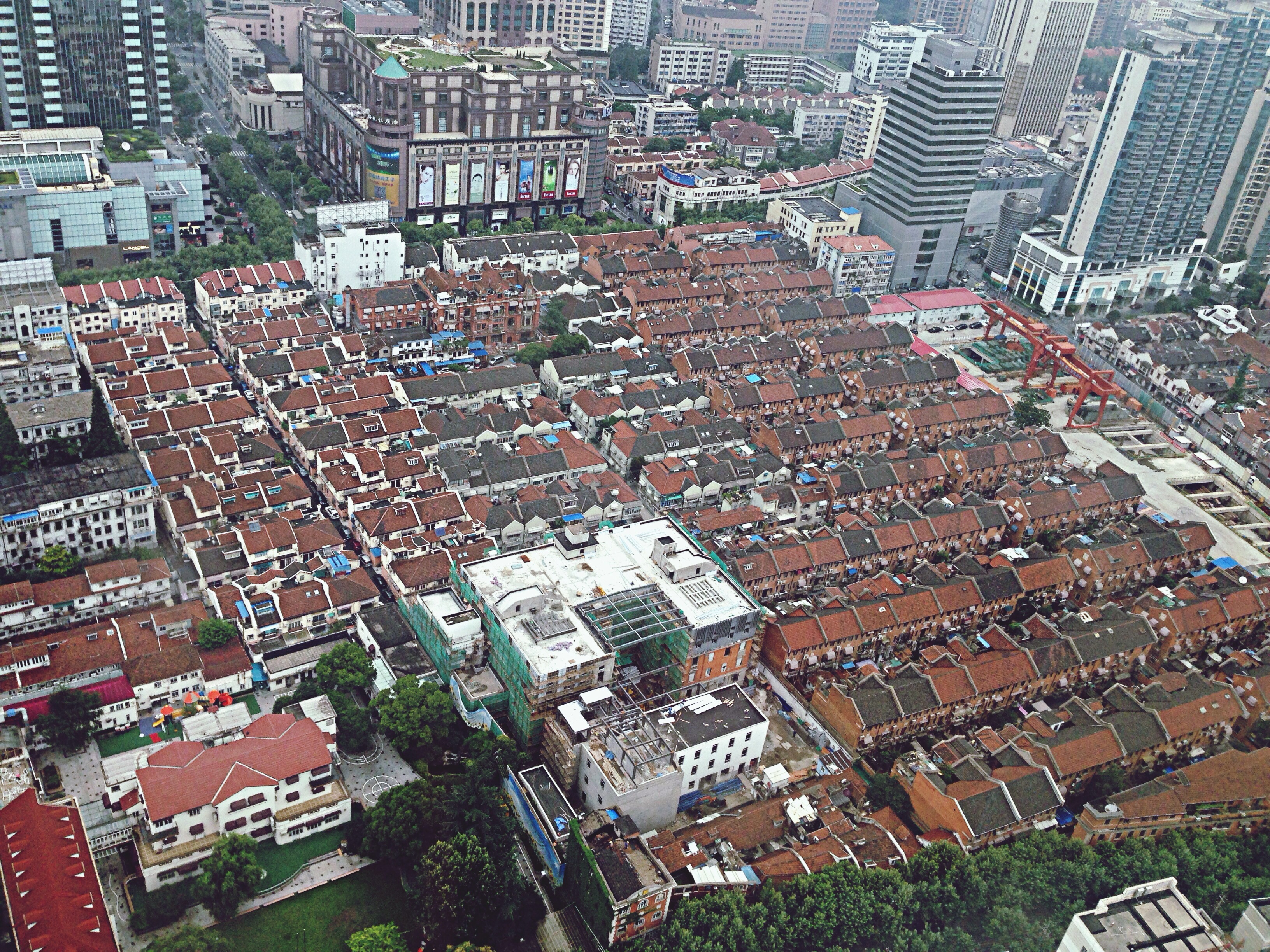
The Shanghai I returned to in 2023 was, by any measurable standard, a more efficient and more livable city than the Shanghai I had left in 2016. The metro had grown into the most extensive urban rail network in the world. Cash had effectively disappeared as a medium of daily transaction; almost everything paid for in central Shanghai in 2023 was paid for with WeChat Pay or Alipay, through a QR code, on a device the user had taken out of a pocket. Ride-hailing services had replaced almost all taxi traffic, in fleets of nearly silent electric vehicles that had also, almost incidentally, halved the city’s audible street noise. The air was cleaner—not pristine, but visibly improved. The street markets I remembered as crowded with motor scooters parked on the pavement had been swept of unauthorised parking by an automated CCTV system that, friends of mine reported, would in some districts send a photograph of the offender to the offender’s mobile phone within minutes, with an embedded payment link to settle the resulting fine. The same network, friends also reported, recognised faces, plates, gait. It was both reassuring and slightly disturbing, depending on which detail of one’s life one preferred to be observed by it.
Some of these changes had been narrated, in the years between my visits, by international press as a kind of dystopia. I want to record honestly, because the book is not a polemic, that nearly every Shanghainese friend I spoke with on this trip described the same changes as improvements. The streets were quieter. The petty crime that had punctuated central Shanghai in 2016—the bag-snatchings on the metro, the gutter-oil restaurants, the unregistered scooters running pedestrians off the pavement—had largely vanished. The trade-off, when my friends discussed it openly, was treated as a trade-off. Some privacy lost; some safety gained. Reasonable people could disagree about whether the exchange was a fair one. Most of my friends told me they had concluded, over the four years of my absence, that it was.
Tranquil Light’s perimeter had also been transformed. The crackdown I describe in Chapter 6—the systematic shuttering, in 2014–2016, of the small commercial businesses along the compound’s outer wall—had held. The boutiques and design studios were gone. The Suzhou Creek warehouses I had passed every week in 2014 on my way to the public library had been converted, in the late 2010s, into art galleries and design hotels. That conversion was, on examination, a piece of textbook gentrification: industrial uses moved out, creative-class uses moved in, real-estate values appreciated, the original workers had no place left in the picture. I had walked along the creek on my 2023 visit. The walk was beautiful. The water was cleaner than I remembered. I thought, while walking, that I owed an honest reckoning with what I had been calling, for almost ten years, “gentrification from within.”[8]
Sitting back in Bangkok in early 2024 to begin this rewrite, I had to admit something the dissertation had not been willing to admit. The term “gentrification” is doing a great deal of moral work in the literature that does not always survive close inspection. Ruth Glass, who coined the term in 1964, used it neutrally.[9] Jane Jacobs, writing about American cities a few years later, gave the word the moral charge it has carried ever since.[10] The charge is partly accurate—classical gentrification really does displace working-class residents and really does, in net, make their lives worse—but it has also flattened a more interesting set of phenomena. The Suzhou Creek conversion. The Huai Hai Road retail collapse. The transformation of factory neighbourhoods into design districts. Each of these is what the literature would call gentrification. Each of them, on examination, has produced a different distribution of winners and losers than the classical Anglo-American case the term was built around. Some of the changes have been good for some of the residents involved. Some have been bad for other residents. The phenomenon is not, in 2026, a single thing.
What I argue in this book is that the configuration I observed in Tranquil Light—original residents capturing the gains of central-city heritage appreciation—is one variant of the larger family of urban-demographic-change processes that the term “gentrification” has been asked to name. The variant is interesting because the original residents are net winners. The variant is interesting because the demographic outcome is increased rather than decreased diversity. The variant is fragile, as the chapters of this book detail. But the variant exists, and it has held in Tranquil Light, and the reason it has held is something the local government has gradually learnt to stop trying to dismantle. Cities, when they are working, accumulate this kind of arrangement. The concept is one small contribution to that vocabulary.
I want to acknowledge, briefly and with some surprise, that in the decade since the concept was first published in a 2016 paper in Asian Anthropology, and then refined in a 2018 article in Urban Studies under the related heading of “gentrification and its contentment,” it has travelled in ways I did not anticipate.[11] Researchers across more than a dozen countries on four continents—Yogyakarta and Jakarta, London, Greece, Seoul, rural China, and several places I have not yet had time to track down—have used the concept as an analytical frame for their own neighbourhoods. The phrase appears in the SAGE Handbook of Cultural Anthropology and in the Routledge Handbook of Planning Theory. A Harvard undergraduate course on Housing and Heritage now assigns it. Alan Smart, reading the Urban Studies piece, called it “an exploration of a kind of gentrification that is generally neglected in most of the literature”; Fulong Wu has drawn on the same ethnography to illustrate how dwellers of Shanghai’s old urban fabric seized rising central-area rental demand and upgraded their own properties.[12] None of this is the kind of thing I expected when I first wrote the term down in a draft journal article in 2015, sitting in my pavilion room with the door open for the breeze. I record it here for two reasons. First, because Routledge’s readers may want to know that the concept the book develops is one that other scholars have already found useful. Second, because the chapters that follow describe a configuration I am no longer the only one looking at, and the analytical framework has been improved, in the years since I left Tranquil Light, by people I have never met working in cities I have never been to. The book is in their debt as well as in the residents’.
There is a sentence I find myself returning to, when I think about the Shanghai I returned to in 2023 and about the citizen-centric smart-city work I have been doing in Thailand since 2019. The sentence is: in cities, as in everything else, we trade something for something. The lilong’s residents have traded a degree of physical comfort for a deeply rooted social network. The Shanghai of 2023 has traded a degree of privacy for a substantial gain in everyday safety. The Nakhon Si Thammarat residents using the @NakhonCity citizen-reporting platform have traded a small loss of anonymity for a much faster municipal response to flooded drains. None of these trade-offs are simple. None of them are the correct trade-off in every place at every moment. The work of urban policy, on the version I have been trying to practise, is mostly the work of being honest about what is being traded for what, and giving the people who actually live in the city a meaningful voice in deciding which trades they want to make.
This book is, in its small way, a record of one set of trades, made over twenty-five years, by the residents of one Shanghai compound. They have remained where they are. They have done it by becoming the kind of community that is hard for the state to dismantle. They have done it through the patient daily work I describe in the chapters that follow. The book is for them.
It is also for the woman who walked the lanes of Tranquil Light with me on two separate trips between 2023 and 2025, and who, on each visit, helped me see the compound with the eyes I had developed in the years since 2016 rather than the eyes I had had then. Her name is Chollawan Wanichpan—“Plub” to those of us who love her. The book’s title, which sounds in English like a piece of social-science methodology, has become for me, in the years she has been part of the project, also a small joke between us. We have been locating Shanghai for several years. We have done it together. The version of the city this book describes is one of several Shanghais we have walked through; the others are not in the manuscript, but they are in the writing of it. I am grateful, to her and to all of the people who have made the long second half of this project possible, in ways that go far beyond what an Acknowledgments page can record.
Welcome to Tranquil Light. The lane is narrower than you think. The neighbour with the thermos of green tea is already on her way over.