This chapter examines what residents of Tranquil Light mean when they perform ‘tradition' and shows that they mean three different things at once. Through the stories of three residents – Teacher Hu, a retired Shanghainese running a small grocery shop on the lane; Rob, a young American expatriate working as a freelance designer; and Little Huang, a twenty-two-year-old migrant from a nearby province living in a north-facing pavilion room – the chapter argues that tradition in contemporary Shanghai is not the residue of an older past but an active, contemporary practice. For Teacher Hu, performing the past is a survival strategy, a way of converting attachment-to-place into bargaining power against the state. For Rob, performing the past is cultural capital, a way of converting lilong-occupancy into professional credibility. For Little Huang, performing the past is a coping mechanism, a way of inhabiting a difficult present by appealing to an imagined shared poverty that her own family did not actually experience. The chapter develops the concept of ‘traditionalism as a way of life' (after Bestor and Wirth) and argues that it is the central practice through which the lilong's residents stay where they are.
‘My last name is Hu,' he said. ‘I was born here in Shanghai in 1944. As a kid, I used to live on a road where there was a well at the entrance to the alley. I remember throwing a coin into that well.'
The man speaking was sitting on a low wooden stool outside the door of his small grocery shop, on a branch lane of Tranquil Light, on a hot August afternoon in 2012. I had brought him a packet of green tea I had been told he liked. We had been introduced ten minutes earlier by a mutual friend, who explained that I was looking for a room in the neighbourhood and that this man was, among other things, the local realtor. The man had taken the tea, opened it, sniffed it, nodded, and asked me to sit down. He had then begun, without further preamble, to tell me his life story.[1]
I would learn over the next two years that this is what Teacher Hu (Hu laoshi) did. He told stories. He told them to me, to anyone walking past the shop, to the children doing their homework on the small folding desk he kept by the door, to the half-dozen elderly neighbours who stopped in every afternoon to drink tea and complain about the local government. He told them in Mandarin so heavily inflected with a Shanghainese accent that, in the early months, I had to ask him to repeat almost everything. He had been telling them for thirty years. The shop was, he would tell me later, more a venue for conversation than a shop. The shop sold cigarettes and confectionery. What it produced was talk.
I want to begin this chapter with Teacher Hu's shop because the shop is, in compressed form, the chapter's main argument. The argument is that the residents of a surviving lilong neighbourhood – and Tranquil Light is among the last of these in central Shanghai – have made an entire way of life out of being old.[2] They have made it on purpose. They have made it for specific, partly practical, partly defensive reasons. And they have made it work, against odds, in a city that has, for at least three decades, been actively trying to make their kind of neighbourhood disappear. They have made it on purpose. They have made it for specific, partly practical, partly defensive reasons. And they have made it work, against odds, in a city that has, for at least three decades, been actively trying to make their kind of neighbourhood disappear.
The chapter follows three residents. Teacher Hu the local Shanghainese. Rob, a young American expatriate who rented an apartment a few doors down from Teacher Hu's shop and stayed for several years. Little Huang, a twenty-two-year-old college graduate from a province a few hours west of Shanghai, who rented the pavilion room I would later inherit when she moved out. The three of them used the word ‘tradition' constantly. They used it, almost without exception, in conversations with me about why they lived where they lived. They meant, on examination, three completely different things by it. The chapter is an attempt to lay those three things side by side and see what they tell us about the city in 2014.
I have written about this material before, in a 2013 article in the Harvard Asia Quarterly.[3] The chapter you are about to read is its longer, slower, and (I hope) more honest cousin. The argument is the same; the patience with each of the three lives is more.[4]
The Home of Teacher and Mrs. Hu
Teacher Hu was born in 1944 in a lilong house a few blocks east of the one in which I would later meet him. His father, before 1949, had run a small chemical factory that nearly went bankrupt during the Sino-Japanese War. After the founding of the People's Republic, the new government nationalised the factory; rather than ruining the family, the Party's intervention saved the business and gave Teacher Hu's father a stable, if modest, role in its continued operation. The family had owned an entire three-storey lilong house in those years. After 1949, in keeping with the new policies, the father was asked to share the house with the families of two other comrades. The Hus kept the bedrooms on the second floor and the main rooms on the third. The first floor went to the comrades.
Teacher Hu remembers, with the specificity of a child who lived through it, what the spatial reorganization of his family home felt like. The walls put up in what had been the parlour. The cooking fires moving into what had been a corridor. The eight children who eventually lived in the house, who had not been there before. He also remembers, with the same specificity, that the experience was not – at the time, in the family – narrated as a loss. The Party had saved the factory. The family had been asked to share. They shared.[5]
He moved to Tranquil Light in 1964, with the woman who would become Mrs. Hu, when his work unit assigned him to a department of industrial measurement and quality control nearby. He has not lived anywhere else since. He retired from that work unit in the late 1990s, as the head of its measurement section, with a small pension that the dissolved unit could no longer fully support. By that point his wife's own work unit had also been wound down; she received an even smaller pension. They had a daughter who needed school fees. They needed extra income.
What they had was a strange piece of inherited spatial luck. Their household, which by the 1990s consisted of two pension-aged adults and an occasional grown daughter who came home on holidays, had been allocated, in the post-1949 redistribution, a 4-by-5-metre bedroom and a small, oddly elongated allotment on the ground floor of the same building. The allotment had, before nationalisation, been the original tenant's garage. Five feet wide. Twenty feet deep. Opening directly onto the lane. The Hus, who had tolerated it for decades as a kind of vestigial closet, took it apart in the early 1990s, lined the long walls with shelves, installed a counter at the front, and turned it into a grocery shop.
By the time I met him, the shop had been in operation for more than twenty years. It sold the things small Shanghai shops sell – cigarettes, instant noodles, packets of green tea, sweets in glass jars, beer, occasional eggs. It made very little money. Twenty-four-hour convenience stores had opened on the surrounding commercial streets in the 2000s and had, predictably, taken most of the casual trade. What the shop produced for the Hus was something else. It produced, first, a routine – a reason to be downstairs every morning, to open the rolling shutter, to set out the small wooden stools, to refill the kettle. It produced, second, a piece of public space. The shop's front extended into the lane the way a bench extends into a park. The wooden stools Teacher Hu set out were rarely empty for long. By 9 a.m. there would be a small group of retirees gathered there, drinking tea, smoking, complaining about a sidewalk repair the local government had announced and not started. By 4 p.m. the children in the lane would arrive home from school; many of them did their homework on a low folding desk Teacher Hu kept by the door. The shop was not, in the strict sense, profitable. It was, in a sense the Hus and their neighbours well understood, social infrastructure.[6]
It was also, more quietly, a real-estate office. Teacher Hu's other vocation – the one that paid more reliably than the shop – was as a local zhongjie, a neighbourhood realtor. He had developed a particular niche over the years: he found rooms in Tranquil Light for non-Shanghainese tenants. The neighbours who wanted to rent out a back room to a foreigner or a migrant brought their listings to him; the foreigners and migrants who wanted to rent in the compound found their way, sometimes by accident, to the shop. He charged the standard agent's fee – eleven to twenty percent of one month's rent. Nearly every non-local resident in Tranquil Light, by the time I arrived in 2013, had passed through his shop on the way in.
I was no exception. I was, in fact, his client. The room I would eventually rent – the pavilion room above the stair landing of a building on the eighth lane – was found for me by Teacher Hu, in the spring of 2013, after a series of letters. Teacher Hu did not, at the time, own a mobile phone or a computer. His most advanced piece of household electronics was a CRT television set. We communicated, for over a year, by handwritten letter. Throughout this chapter, the passages I quote at the start of each section are from those letters. The verbal exchanges are, where I can reconstruct them, in quotation marks.[7]
I want to mark, here, an important first observation about Teacher Hu's life. The shop, the realtor work, the small daily routines of stool-setting and tea-making, the conversational platform the lane became around him – all of these are easy, on a casual reading, to file under ‘tradition.' This is what an older Shanghainese man in an old neighbourhood is supposed to be doing. This is what every guidebook to lilong life would tell you Tranquil Light is, in microcosm. None of this is wrong. All of it is incomplete. The reason it is incomplete is that almost everything Teacher Hu did, in those daily routines, was also doing political work.
Heritage Traditionalism
‘In a couple of years,' Teacher Hu said to me one afternoon in late 2013, ‘if not less, the government will turn our houses into high-end shops just like the others.'
He said this calmly, without bitterness. He said it the way a small farmer in a flood-prone valley might describe the river. He had watched his neighbours – many of them, his colleagues from the work unit, lifelong friends, the couples his children had grown up around – relocate to suburban apartments over the previous decade. He had seen the relocation packages improve as the residents who remained in central Shanghai became more politically sophisticated and the local government's cost of clearing them rose. He had also seen the new metro station and shopping complex now under construction directly outside Tranquil Light's east wall. He understood, with the clarity that comes from forty years of paying attention, that his neighbourhood's continued existence was a temporary condition.
What he had also understood, by the time I met him, was that the longer that temporary condition could be extended, the better the eventual relocation deal would be. And the way to extend it, in 2013 in central Shanghai, was to be unmistakably what the local government had decided the city should preserve.
Heritage was the lever. The compound had been listed as a Protected Building of the Third Category since 2004. The local government, in advance of the 2010 World Expo, had spent considerable money repointing brick, repainting doors, and rebuilding gates. The local press and the international press treated the compound, on the rare occasions when they treated it at all, as a piece of vintage Shanghai. Demolishing it would, by 2013, have cost the local state real reputational currency. Demolishing it without a substantial relocation package would have cost more. The residents of Tranquil Light had figured this out long before the local government had figured out that they had figured it out.
Teacher Hu's job, in this strategic environment, was to look like a person who could not be relocated without scandal. He performed this with a discipline that I did not, at first, recognise as performance. He wore the same shirt, washed by hand, for a decade. He owned a washing machine and used it sparingly. He did not own a mobile phone. He drank tea in the lane every morning. He watered his plants at exactly the same time, in roughly the same way, every day for the years I knew him. He resisted, with what I came to recognise as deliberate care, every form of technological modernisation that would have been available to him at any reasonable expense. The character he was performing was the character the state had committed itself to protecting. Spoiling the character, even slightly, would have undercut the protection.[8]
I want to call this performance ‘heritage traditionalism,' and to be careful about how I mean it.[9] I do not mean that Teacher Hu was being insincere. He genuinely lived this way. He had lived this way for a long time before the state had any policy interest in his lane. What I mean, instead, is that the practice he had been cultivating for personal reasons across three decades of his adult life turned out, in the historical conjuncture of post-2004 central-city preservation, to coincide exactly with what the local state needed his neighbourhood to look like. He did not change his behaviour to fit the policy. The policy, in a sense, came to fit him.
The Shanghai-based anthropologist Tianshu Pan has used the phrase ‘Shanghai nostalgia' for a related phenomenon – the public sentimentalising, in the post-reform era, of a stylised version of pre-1949 city life.[10] Pan's point is that this nostalgia is a contemporary product, not an inheritance. It serves contemporary functions. The most important of those functions, I would add, is that it gives ordinary residents a usable script. The script, when followed precisely, makes them harder to evict.
There is a hierarchy at work in the post-2000 global heritage market that the residents of Tranquil Light have learned to read. In that hierarchy, older is worth more, European-derived is worth more, and visibly-old-but-photogenically-livable is worth most. The compound, with its 1930s brick frontage and its central location, sits very near the top. Teacher Hu's daily routine of tea, plants, and the wooden stool outside the shop – a routine he had been performing for decades – happens to be, in 2014, the visible surface of a piece of urban property that the city is willing to defend. That coincidence is the thing the chapter wants to name. The residents, by being who they have been all along, have become valuable in a way that has very little to do with what they themselves want.[11]
The Mahjong Circle
Every afternoon between three and five, in the southern half of Tranquil Light's main thoroughfare, two dozen residents in their late sixties and seventies gathered at a folding table to play mahjong. The table was set out by an older couple in the eighth lane, removed each evening, brought out again the next day. The same six or seven players sat at the table at any given time. The players rotated; the audience around them did not. There were always, by my count, between eighteen and twenty-five neighbours standing or sitting nearby, drinking tea, watching, kibitzing, gossiping.
I want to say something straightforward about this gathering. The gathering is not principally about mahjong.
The gathering is about information. It is where the residents of Tranquil Light circulate, daily, what they know and what they suspect about the political conditions of their compound. Who has been visited by the wuye. What relocation package was offered to whom on what street last week. What the latest district-level rumor is about the metro extension. Whose nephew has been quietly trying to evict whose grandmother. Whose son has gotten married and where, and what the married couple's new apartment cost. The mahjong tiles click. The conversation does not stop.
I came to think of the mahjong circle as the political organ of the compound. It is not a formal organ. There is no chair. There are no minutes. There is no membership list. It does not, on any single afternoon, decide anything. What it does, slowly, is build a shared narrative – about who Tranquil Light is, why it should not be demolished, what its history is, what its residents are entitled to. The narrative is not unanimous. It is contested in fine grain every afternoon. But it converges, over weeks and months, into a position that the compound can collectively articulate when the local government's negotiators come knocking.[12]
One member of the circle – a woman in her early sixties who had moved into Tranquil Light in the mid-1970s – kept a small notebook in which she wrote down stories about the compound's history that she heard in the lane. Some of those stories were verifiable; some were not; some were almost certainly invented. She did not, when I asked her about it, see the distinction as important. ‘Stories,' she told me, ‘spread faster than anything. So we've learned that if we can show how much we love our home, we'll get a better compensation package.' She was not being cynical when she said this. She was reporting an empirical regularity she had observed over thirty years of city life.
She had a particular story she liked to tell, about a certain Mr. Li who had lived in a lilong neighbourhood north of Tranquil Light, near Suzhou Creek. According to her, Mr. Li had been displaced from that neighbourhood during the Cultural Revolution; had been allowed to return to his old room in the late 1970s after the political winds shifted; had then, in the 1990s, been given a relocation package worth roughly 2.65 million yuan when his block was finally cleared for redevelopment. ‘His room was smaller than mine,' she would say, with feeling. ‘Just because he could prove he was sentimentally rooted to the place. Just because.' I tried, on three occasions, to verify the number. I could not. The number was less important than the story. The story was a teaching device. It taught residents what kind of self-presentation, in their negotiations with the state, paid.[13]
Heritage traditionalism, as I am using the phrase, is the collective product of this kind of circulation. It is what the mahjong circle and the morning shop-front and the afternoon lane-conversations and the realtor's letters slowly produce, day by day, year by year. It is not the past surviving into the present. It is the present, made under conditions of significant pressure, choosing carefully which version of the past to perform.
Rob: Tradition as Cultural Capital
Rob lived in the same lane as Teacher Hu, three doors down, on the top floor of a renovated lilong house. He was twenty-eight when I met him in the autumn of 2013. He had a bachelor's degree from a small college on the east coast of the United States. He had moved to Shanghai in 2010 – just before the Expo – to teach English to schoolchildren at a private academy on the surrounding commercial street. By the time I met him he had quit teaching English and had set up his own freelance design business, selling, as he put it, ‘a Western design sensibility' to upscale Chinese clients. The business was doing well.
Rob's apartment was the opposite of Teacher Hu's. It was bright. The walls were freshly painted. The original wooden floors had been refinished. The room had high-speed internet, an air-conditioner, and a flat-screen television. There was a Le Corbusier chaise longue near the window. There was an art-deco sideboard he had picked up from a neighbour for a few hundred yuan. The renovation had been carried out by his landlord – an elderly woman who had moved in with her son in Pudong – specifically to make the apartment rentable to foreigners. There were, at any given time, between ten and fifteen apartments in Tranquil Light renovated to a similar standard, renting for between 3,500 and 8,000 yuan a month. The market for them was, almost without exception, foreign.
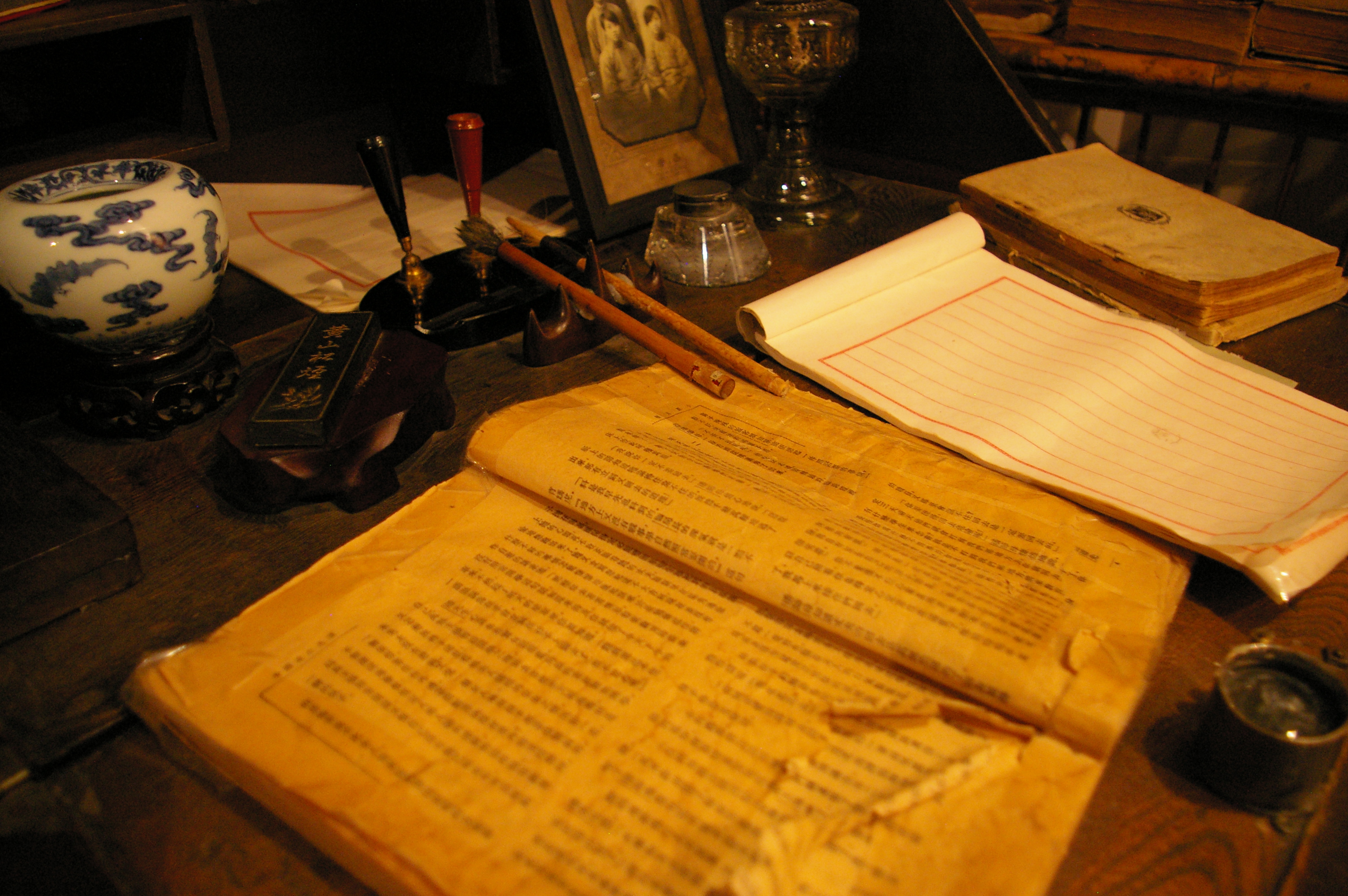
Rob loved the apartment. ‘This is a once-in-a-lifetime experience,' he told me one evening over a beer. ‘I am going to have a lot of stories to tell after these years in Shanghai.' He had begun, in the months before I met him, to use the apartment as a professional asset. ‘I live in an old lilong house in Tranquil Light' had become, he told me with a slightly self-conscious laugh, his standard introduction at networking events. He believed, with what I came to recognise as accurate professional intuition, that the address was doing real work for his client roster.[14]
He elaborated on this one afternoon, in a sentence that I want to quote carefully because it does what the chapter is trying to do, in compressed form. ‘Since I have become a designer,' he said, ‘it's more important than ever that my clients know I have a good taste. Can you imagine if they find out that I live in a normal boring condominium, and not an authentic lilong house? They'd probably stop giving me projects. They'd think I am just another foreigner.'
I want to take that sentence apart. The first thing it tells us is that Rob understood his apartment to be, among its other functions, a credential. The second thing it tells us is that the credential was specifically about ‘taste.' The third thing it tells us is that the credential was racially marked: he was protecting himself, by living in the lilong, from being read as ‘just another foreigner.' Living in the lilong made him a particular kind of foreigner – a foreigner with discernment, a foreigner whose sensibility was Chinese-readable, a foreigner who could be trusted with high-end design work. The lilong, in this account, was not heritage. The lilong was Bourdieu.
Pierre Bourdieu's concept of cultural capital is, of course, doing the analytical work here.[15] Bourdieu argued that members of dominant social classes accumulate a particular kind of resource – taste, credentials, knowledge of the right names – that is exchangeable, in the right markets, for economic gain. Rob was, in 2014, living through this exchange in plain view. He had converted economic capital (his ability to pay 6,000 yuan a month for an apartment that an equivalent-sized condominium nearby would have cost about half as much to rent) into cultural capital (his lilong address, his sensibility, his good taste) and was now in the process of converting that cultural capital back into economic capital (design fees from clients who hired him because of who he was, where he lived, and what those things signaled together).
What I want to add to Bourdieu's argument, in the case of Rob, is that the cultural capital being accumulated was not just about ‘taste' in the abstract. It was about a particular kind of cosmopolitan-Western reading of Chinese tradition. The whole point of Rob's living arrangement, professionally, was that he was a Westerner who lived inside a Chinese tradition that the Chinese themselves had largely moved out of. His reading of the lilong was, almost by definition, exoticizing. He could not have been doing this work as a Chinese man. The lilong's value to him as cultural capital was, in part, a function of his foreignness.[16]
The older residents of Tranquil Light, Teacher Hu among them, were aware of this and, on balance, encouraged it. Foreign tenants paid premium rents. Foreign tenants brought media attention. Foreign tenants, by the simple fact of their presence, reinforced the compound's claim to be culturally significant. ‘See,' Teacher Hu said to me on more than one occasion, ‘even foreigners want to live here.' That sentence is, in its small way, the chapter's second main observation. Heritage traditionalism is not a one-actor performance. It is a coproduction, between the original residents who do the performing and the foreign residents who do the audiencing – and, in some cases, the further coproduction with friends and clients of those foreign residents back home, who never visit the lane but read about it on the foreigners' social media.
Little Huang: An Imagined Past
Little Huang was twenty-two years old when I met her in the autumn of 2013. She had just finished a finance degree at a Shanghai university and had taken her first full-time job, at a private wealth management firm a few blocks from Tranquil Light. She rented a tingzijian – the small north-facing pavilion room above the stair landing – in a building two lanes over from mine. Her room was about three-quarters the size of mine, which is to say it was very small. It had a single small window, which she rarely opened on account of mosquitoes in the summer and cold in the winter. It was, walking into it, the closest thing to a cave I have ever entered in central Shanghai.
Little Huang did not love her apartment. Little Huang did not even particularly like her apartment. ‘What choices do I have?' she said to me when I asked about it for the first time, in the small dumpling restaurant on the corner where we sometimes ate dinner. ‘None. But it's okay. Traditionally, everyone was equally poor, right? So why shy away from it?'
I want to spend a moment on that sentence, because it is the one Little Huang gave me when I asked her how she handled living in a room that lacked sunlight, ventilation, and most other features that residents of central Shanghai would, in 2013, have considered minimally adequate. She invoked tradition. She invoked, specifically, a tradition of shared poverty. In her narrative, her acceptance of the cave-like room was a kind of moral consistency with how Chinese people, in some unspecified earlier time, had also lived.
She elaborated on this in subsequent conversations. ‘You just have to get used to it,' she said. ‘I had a room in my hometown that was a bit bigger, but the situation was the same. This is what we have. This is what people like us have.' She would tell her friends, she said, that she had a room in downtown Shanghai. She would not bring her family to see it. She did not see those two facts as contradictory. The address was the part of the apartment that mattered to her social presentation. The interior was the part that did not.
I might have left this where Little Huang's own narrative left it, except that I met her mother. The meeting was incidental – her mother had come up to Shanghai to help Little Huang move out of the room, in the spring of 2014, after Little Huang had saved enough to take an apartment across town with two roommates. Little Huang's mother was a middle-aged accountant. She was warm, organised, and took an instant interest in me as a foreigner who had befriended her daughter. We had a long conversation while Little Huang was downstairs paying off the wuye for utility costs.
I asked Little Huang's mother, casually, about the ‘poverty' Little Huang had referred to. Her mother looked confused. ‘Poverty?' she said. ‘What poverty?' She thought for a moment. ‘Maybe what Little Huang's father went through during the Cultural Revolution? When he was sent to the countryside? But that was him, that wasn't Little Huang. Little Huang was born in 1991. We were already much better off by then. No, Little Huang has not lived through any traditional poverty. I don't know where that idea came from.'[17]
I had not expected this. I had taken Little Huang's invocation of tradition at face value – as a description of a remembered family condition that gave her a frame to handle her present condition. It was not. It was an imagined past. Little Huang had never been poor in the way she described. Her parents had not been poor, in that way, in her lifetime. The ‘tradition' she was invoking was something she had constructed, deliberately or unconsciously, as a coping mechanism for a present that, in its actual conditions, was harder than she wanted to admit out loud.
I want to be careful with this observation. I do not raise it to expose Little Huang or to undermine her account of her own life. The opposite. I raise it because Little Huang's invocation of tradition is, for me, the most analytically interesting of the three I describe in this chapter. Teacher Hu invokes tradition to negotiate with the state. Rob invokes tradition to position himself for clients. These are both strategic uses of an inheritance that, however mediated, has some claim to historical reality. Little Huang invokes tradition that she has, consciously or otherwise, made up – and her invocation is no less real, in its psychological consequences, than the others. The tradition she has constructed lets her live in a room she would otherwise not be able to live in. It does for her what Teacher Hu's heritage traditionalism does for him, and what Rob's lilong-as-cultural-capital does for him: it converts her difficult circumstances into a livable arrangement.
There is also, of course, a structural story under Little Huang's invocation. As a non-local resident – her hukou was registered in a province a few hours west of Shanghai – Little Huang did not have access to the city's social housing, public health system, or school system on the same terms as her Shanghainese-born colleagues at the same firm. She earned a junior salary. She could not legally buy property in the city without changing her hukou through a complicated point-based system that would, optimistically, take five years. She was, in the language of the relevant scholarship, a member of the floating population (liudong renkou) – a category that, since the 1980s reforms, has provided the cheap labour for nearly every Chinese city's growth and that, simultaneously, has been kept formally excluded from each of those cities' civic provisions.[18] The pavilion room was the only thing she could afford in central Shanghai. The alternative was an hour each way on the metro from the suburbs, which she had calculated would have cost her roughly fifteen percent of her waking life over the four years she expected to be in the position.
I rented Little Huang's room when she moved out. The rent was 1,200 yuan a month. The room was the room I have already described in Chapter One, where I lived for sixteen months, which is to say the room from which most of the rest of this book was written. Little Huang was right about one thing: it took me about a month to get used to it.[19]
Three Traditions, One Compound
Lay these three traditions side by side. Teacher Hu's. Rob's. Little Huang's.
Teacher Hu performs tradition as a survival strategy, and as a piece of collective political work. He is part of a network of older residents whose patient, daily performance of an inherited Shanghainese way of life has, over the past decade, made the local government's attempts to demolish their compound progressively more expensive. He cooperates, in this performance, with a state that wants the compound photogenic. He does not cooperate with the state in wanting the compound emptied of him. The performance lets him stay.
Rob performs tradition as cultural capital. He is a young foreigner in the early stages of a freelance career. His lilong address, his renovated apartment, his curated antique furniture, and his demonstrable appreciation for traditional Shanghai aesthetics all function, in his professional life, as the credentials of a particular kind of cosmopolitan reader. The reading is exoticizing. It pays. It pays partly because the older residents and the local government, between them, have agreed to maintain the compound as a place where this kind of reading is possible.
Little Huang performs tradition as an imagined past, as a coping mechanism for present hardship. Her invocation of an older shared Chinese poverty is, on her mother's testimony, factually inaccurate as a description of her own family's history. It is, as a description of how she handles her own present, fully real. It allows her to live in a difficult room without losing dignity. It also, not incidentally, allows her to inhabit the same lilong as Teacher Hu and Rob and to participate, through her presence and her rent, in the same compound's continued existence.
What the three of them share is the structural fact that, in 2014 in central Shanghai, performing tradition is what you do to stay where you are. The mechanisms differ. The labels differ. The personal stakes differ. The performance is constant. The lilong, as a building form, has been rendered into a stage. The residents, with very different scripts, are all performing on it.
I want to offer, in closing, a sociological observation that I believe travels beyond this case. The hierarchy of value in the global heritage market is real, and it is asymmetric. Older European-derived forms occupy the top of that hierarchy. Forms from the global south, where they survive at all, are valued in proportion to their legibility within the European-derived frame. The lilong's photogenic British-rowhouse inheritance is, in this hierarchy, an unusually valuable thing. Tranquil Light's residents have, by trial and error and through the patient daily work I have described, learned to read the hierarchy and to perform inside it. They have learned that some kinds of poverty are valuable to the global heritage market and other kinds are not. They have learned to perform the valuable kind.[20]
The cost of performing the valuable kind is that the inside of the building does not improve. The residents accept this cost because the alternative – which is, almost without exception, relocation to a peripheral high-rise where their forty-year neighbourhood network would dissolve – is worse. The state accepts the cost because the photogenic exterior is what it has committed to maintain, and what it can show to international visitors, and what it can, eventually, sell.
Little Huang has now moved across town. Rob, the last I heard, had left Shanghai for a design job in Los Angeles. Teacher Hu was still in his shop the last time I saw him, in late 2024, on a brief return visit. He looked older. The shop looked the same. The wooden stool was still by the door. He told me, sitting down on it, a story about a soccer coach who had grown up in the lane in the 1950s. I had heard the story before. I sat down to listen to it again.[21]